
The Bengaluru-based firm competes with US rival Uber whose lukewarm IPO last year has contributed to the lag in valuation trend among the unicorns across the Indian start-up ecosystem.
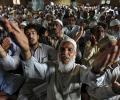
A key United States Congressional committee has called for a public hearing on the rights and freedoms of religious minorities in India to be held early next month.

A good business school will put you through a battery of tests to improve your soft skills, says Dr Tarun Pasricha.

'We cannot ignore the role of public institutions in driving development... I don't see much focus on institutional renewal.'
Have you been asking yourself this question? Then these 8 tips are meant for you.
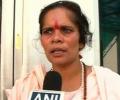
VHP leader Sadhvi Prachi on Tuesday kicked up another controversy with her remarks that those who are opposed to Yoga should go to Pakistan.
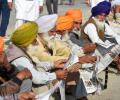
In politics, if your objective is only winning elections, just Chanakya neeti might do. For governance you need both, Chanakya neeti and Ram Rajya. You can neither beat up the farmers into submission, nor dismiss them as 'Khalistanis', asserts Shekhar Gupta.

'While military acts such as the Uri surgical strikes are one option, cultural, economic and diplomatic isolation should also be part of the arsenal,' argues Sankrant Sanu.

'It is vital that objects such as the Harihara -- and collections from South Asia generally -- remain here,' the British Museum tells Vaihayasi Pande Daniel.
'Potent nationalism doesn't just distract from the economic task at hand; it actively undermines it.'

Anushu Gupta is being recognised for "his creative vision in transforming the culture of giving" in India and Sanjiv Chaturvedi for 'Emergent Leadership'

India needs to unleash technological and social innovations that can usher in a new developmental model the world has not seen before, TCS Vice-Chairman S Ramadorai said.

Noted writer Nayantara Sahgal, who recently returned her 'Sahitya Akademi' Award over the Dadri lynching case, has said secularism is under threat like never before and that individual freedom and rights have to be protected even these are guaranteed in the Constitution.

Is it just the glamour?

A fresh global skill gap study shows how India can tap opportunities in Germany, New Zealand, Qatar, Malaysia, The Netherlands, Saudi Arabia, Singapore, Sweden, Switzerland, UAE and the UK.
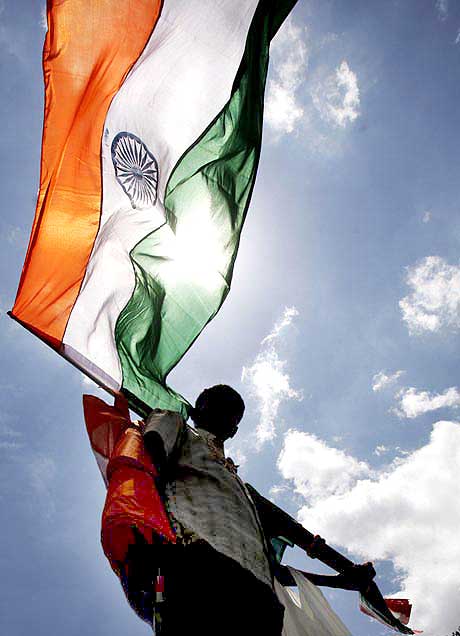
How has the Indian State, in principle and practice, given shape to the essential ingredients of the secular principle and composite culture?

Domestic cricket will only happen when travelling is safe: Ganguly
Arsh Ali's work is about getting reliable evidence about the ancient Buddhist link between India and Egypt, discovers Veenu Sandhu.
'The attacks made clear to all the Gulf States that Pakistan was the nursery and sanctuary of extremist violence and that this violence threatened all the countries in the region.'

'By annoying the Arabs and cozying up to Iran, Pakistan may end up losing Arab economic support, annoying the Americans and increase Shia-Sunni tensions domestically,' Colonel Anil A Athale (retd) points out.

'We have set out a timetable to reduce income tax rates for all incomes below Rs 50 lakh, and to progressively eliminate the surcharges on income above Rs 50 lakh, by 2024.' The Budget speech past CII president Naushad Forbes wants to hear.

Entrepreneurship is all about identifying a need or a gap and being able to visualise a solution to service the same in a sustainable and commercially viable manner, says Achin Bhattacharyya.

'Kota is good if you are good' and 'Kota can make you or break you' are two cryptic statements Kota students often offer to explain life in their world.

What has not changed in a decade is the character of Rizwan Khan. He is complex, multi-dimensional and lovable. In fact, his character continues to grow on you, notes Mohammad Asim Siddiqui.

'We rarely choose to fight when the threat is still a nascent threat. When we do fight, we fight when the invaders reach Panipat and are preparing to knock on the gates of Delhi.'
Aseem Chhabra lists his favourite Indian films of 2021.
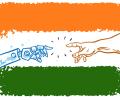
A culture of science and innovation must be embedded in society wherein people not only use new technology but understand it as well. Without this, obscurantism and blind faith can sit side by side with digital technology and, in fact, use the same technology to reinforce their hold on people, says Shram Saran.
Every month you should work on these questions: Who am I? What skill set do I have? What experience do I have?

'Stumbling blocks teach a lot and should be taken as stepping stones.'

'Are moving towards a political culture that provides more space for violence and a paranoid political rhetoric,' asks Nitin Desai.

Modi said the government aimed at spreading digital literacy across rural India.
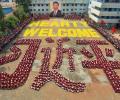
Trump can afford to say that COVID-19 is a 'China virus', but we can't expect Modi to say that aloud while his actions may speak louder, says Rup Narayan Das.
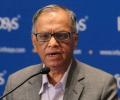
The founders, who hold 12.75 per cent stake in Infosys, together with a dozen leading institutional investors with a cumulative stake of about 10 per cent forced the Infosys board to bring back Nilekani.

'Learning by doing is in our genes.' 'We are applying the wrong method by making our children sit in a classroom for eight hours, listening to someone talk.'

The virus had broken out in the lead-up to the opening ceremony in Pyeongchang last Friday and led to some 1,200 security staff being quarantined. Organisers had to call in military personnel to replace them.

Here are the best moments from Abe's visit on Day 1.
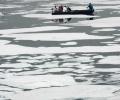
Through its programmes, Swechha tries to ensure Delhiites don't forget their dying river.

The start-up story appears to be losing its sheen due to corporate misgovernance, financial mismanagement and gender discrimination.
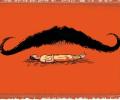
'In this moment, many women are incandescent with anger at the injustice of it all, and are done with being patient. They want to breathe.' 'They've decided to set fire to this toxic oxygen, and to make it as uncomfortable for men as it is for women,' says Mitali Saran.

Street art has emerged from its rebellious underground existence to a growing art genre in its own right. Ritika Bhatia maps the Indian leg of the movement.
